
How to Buy from 1688 in the UK: A Step-by-Step Guide for Small Businesses
If you want to know how to buy from 1688 in the UK, start with a product specification, an estimated landed cost and a plan for receiving the goods in China. Once you have shortlisted suppliers, confirm the price for your exact variant, approve a sample, arrange payment and inspect the order before it leaves China.
You can manage the purchase yourself or work with a 1688 buying agent. The right setup depends on whether you can communicate with the supplier, complete payment, receive parcels in China and deal with problems before export.
This guide focuses on small businesses importing stock for resale in England, Scotland and Wales. If your delivery address is in Northern Ireland, check the requirements for that route before ordering. You may need an XI EORI number, and separate product rules may apply. GOV.UK

What Is 1688 and Can UK Businesses Buy from It?
1688.com is Alibaba Group’s wholesale marketplace focused on the Chinese domestic market. It brings together manufacturers, wholesalers and other suppliers across many product categories. A UK business can use the marketplace to find stock, request samples and compare suppliers. Before ordering directly, confirm the payment options available to you and ask where the seller can deliver. home.alibabagroup.com
There are two practical ways to buy:
| Buying route | What you arrange | When it makes sense |
|---|---|---|
| Buy directly | You communicate with sellers, arrange payment and organise delivery to a warehouse or freight forwarder in China. | You already have a workable payment method and a reliable way to receive and check goods in China. |
| Use a 1688 buying agent | The agent can confirm specifications, coordinate the purchase, receive parcels and arrange agreed checks and shipping. | You are placing a first order, combining purchases from several sellers or need someone in China to handle discrepancies. |
If you use an agent, ask for an itemised quote and check who places the order, who receives your payment and how refunds or replacements are handled. Ask what the inspection covers and whether repacking, storage and international freight are quoted separately.
Step 1. Define the Product and Check UK Requirements
Write a short buying brief before looking at listings. Include the intended use, material, dimensions, colours, quantity per variant, packaging and delivery postcode. If the product needs to fit another item or meet a particular tolerance, include a drawing or measurements.
Set a maximum landed cost per sellable unit. Work backwards from your expected selling price, allowing for marketplace fees, UK fulfilment, returns and your target margin. This gives you a budget for comparing supplier quotes.
Check the rules for the exact product
A product listed on 1688 may have been made for sale in China. Check the requirements that apply to your product in Great Britain before paying for production. Depending on the category, you may need relevant test evidence, technical documentation, labels, warnings or importer details. Electrical goods and toys are examples where category-specific checks matter. Match any report or declaration to the exact model and specification you intend to buy. GOV.UK
Step 2. Find Products on 1688 and Compare Like for Like
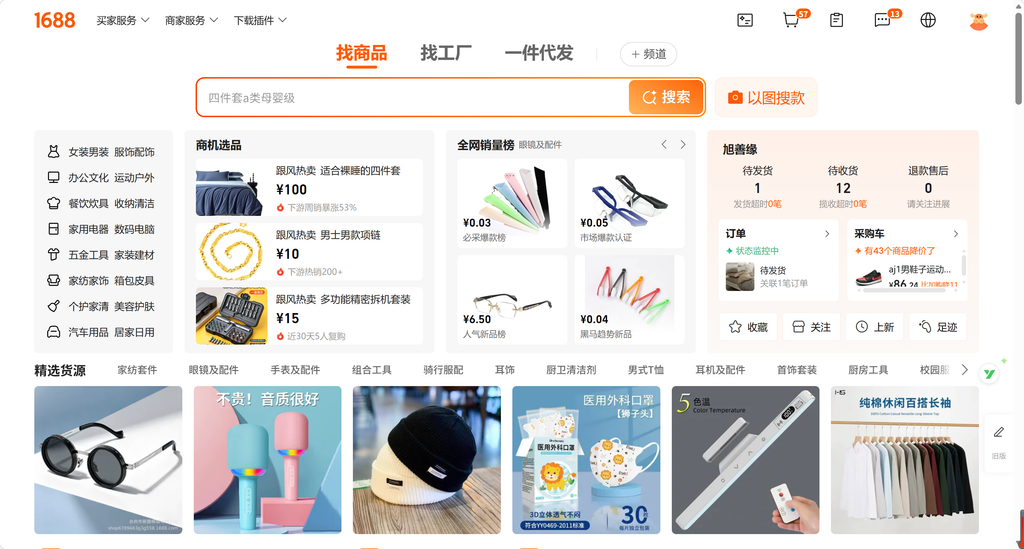
Search with a clear product photo or a Chinese keyword that includes the material and intended use. For example, 帆布收纳袋 is a starting point for canvas storage pouches. Add terms for the closure, size or lining to narrow the results.
Shortlist three sellers and send each the same specifications and quantities. Ask for:
- The unit price for the exact variant and the price at your intended quantity.
- The minimum order quantity, including any minimum per colour, size or design.
- Sample availability and cost, plus the time needed to prepare it.
- Stock availability or production lead time, with an estimated dispatch date.
- Delivery cost to your China warehouse, plus carton count, dimensions and gross weight.
- Packaging and labelling costs, including any charges for custom printing.
A listing may show a low price for a different size or a larger order quantity. Ask for a written quote that shows the exact items you intend to order. If two suppliers quote the same unit price, compare carton size and packing quality as well. Those details can change the shipping cost and the condition of the goods on arrival.
Step 3. Verify the Supplier and Approve a Sample
Ask for the supplier’s registered Chinese company name and business licence. Compare the details with the shop information and written quotation. If a seller asks for payment outside the platform or changes the beneficiary at the last minute, verify the request through a contact you already trust before transferring funds.
For a stock order, focus on whether the seller can supply the agreed specification consistently. For custom production, also ask which factory will make the goods, which processes it handles in-house and whether the order will be subcontracted. A factory audit can help when you need to assess production capacity or quality controls before committing to a larger order.
Turn the approved sample into a checklist
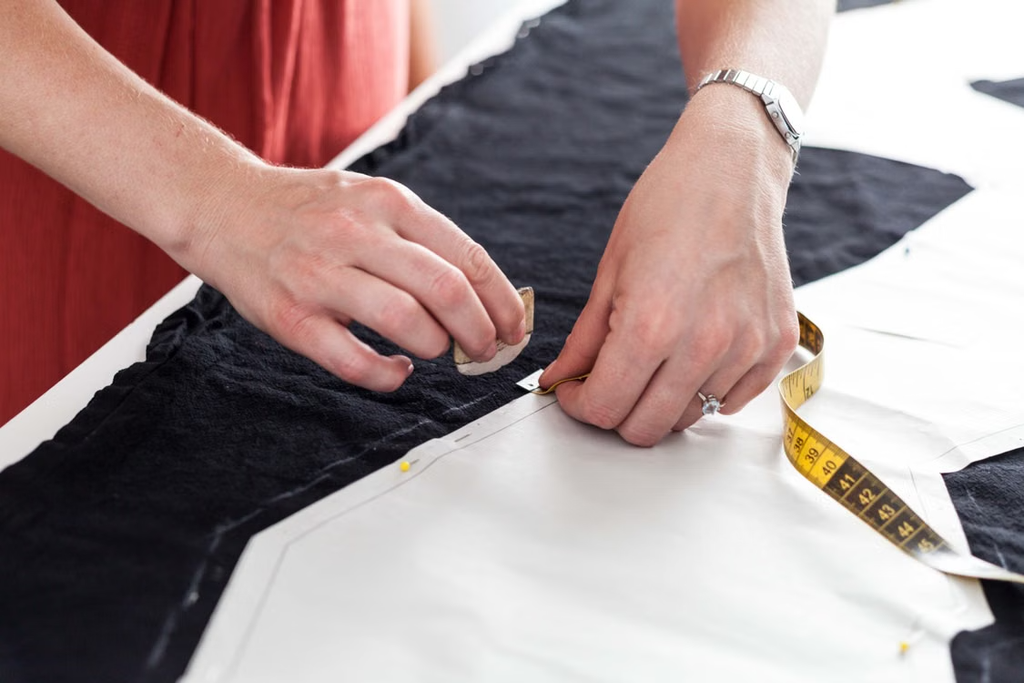
Check the sample for the features a customer will notice and the faults most likely to cause returns. For a zipped pouch, measure the finished dimensions, check the seams and operate the zip several times. Photograph the approved sample and record the colour, dimensions, materials and packaging.
Send the supplier a written approval that identifies the sample and any changes required for the bulk order. If the supplier proposes a material substitution, ask to see and approve it before production. Keep the photographs and measurements available for the warehouse or inspector.
Step 4. Confirm Payment Terms and Receive the Order in China
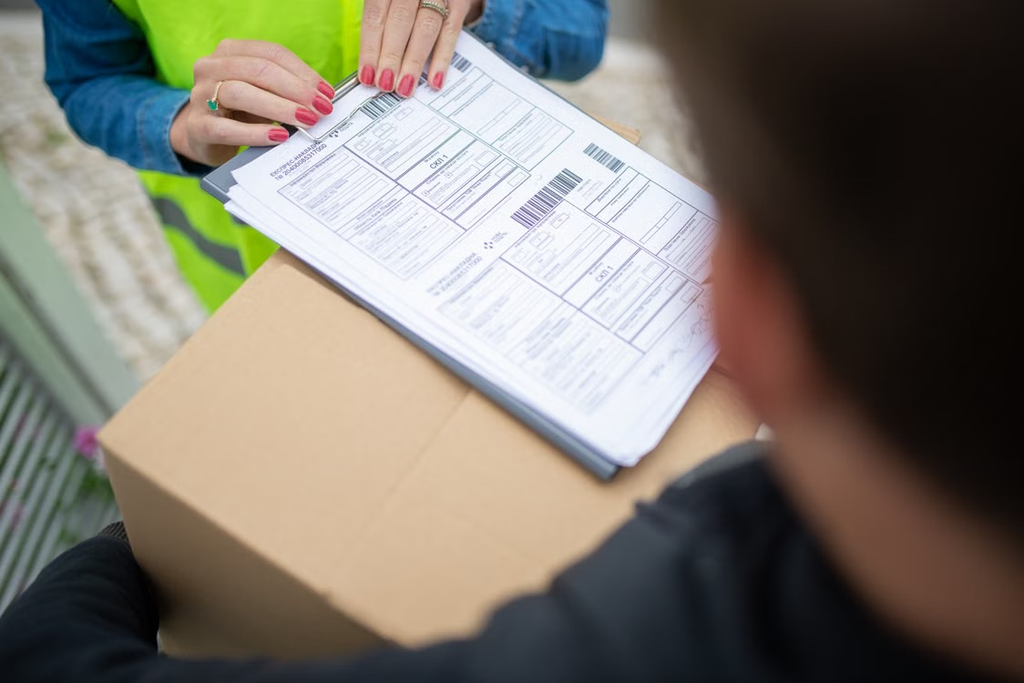
Before paying, confirm quantities by SKU, the dispatch deadline, payment milestones and what happens if the supplier sends the wrong item or ships short. Keep the order confirmation, invoice, payment record and correspondence together. If a buying agent places the order, ask how it will record the supplier’s commitments and handle any claim on your behalf.
Give each supplier your China warehouse address and a unique receiving reference. Ask the warehouse to record the supplier, carton count and arrival date. Agree in advance whether it should count individual units, check SKU labels and photograph discrepancies. For orders from several sellers, do this before packing everything together so that each problem can be traced back to the right supplier.
Decide how much inspection you need
For simple stock, a warehouse check can confirm quantities, colours, labels and obvious visible damage if those tasks are included in the agreed scope. For custom or higher-value goods, consider a pre-shipment inspection with written acceptance criteria and functional checks where relevant.
If a shipment comes up short or fails a check, ask the warehouse to hold the affected stock. Share the evidence with the supplier and agree on a replacement, credit or rework before authorising shipment.
Step 5. Compare Freight Quotes and Prepare for Customs

Ask for quotes based on the final packed dimensions, gross weight, contents and delivery postcode. Express services can suit samples and small cartons. Air freight can suit time-sensitive stock, while sea freight in a shared container can make sense for larger orders when you can allow more time. Ask whether the quoted transit time starts at collection or departure and whether it ends at the terminal or your door.
For light but bulky goods, ask how the carrier calculates chargeable weight. When you compare a combined shipment with separate parcels, include repacking fees, any waiting time and whether one late supplier could hold up stock you need sooner.
Confirm who will handle the import declaration
If your business is the importer into Great Britain, arrange a GB EORI number. Identify the commodity code using the UK Trade Tariff, confirm the goods’ origin and ask your broker how to declare the customs value. The commodity code helps determine the duty, VAT treatment and any relevant controls. Make sure the invoice, packing list and product descriptions give the broker enough detail to prepare the declaration. GOV.UK
If you receive a DDP quote, ask who will be named as importer, who will pay the import charges and what customs records you will receive. If your business is VAT-registered, check whether you can use postponed VAT accounting and tell the broker before it submits the declaration. The import VAT calculation can include customs duty and certain incidental expenses as well as the customs value. GOV.UK
Step 6. Calculate the Landed Cost Before You Reorder

Add together the costs of buying, checking and delivering the stock. Divide the total by the number of sellable units, especially if some items need to be returned or replaced. Track import VAT separately so you can see both the cash required and the cost to the business after any eligible VAT recovery. GOV.UK
Worked example for a small retailer in Manchester
A retailer plans to test 120 unbranded zipped pouches in three colours. It chooses two suppliers, approves samples and sends both orders to a Guangzhou warehouse. The warehouse is asked to count each colour, check the zips against the approved samples and record the packed dimensions before the retailer books freight.
The figures below are illustrative. The duty and VAT amounts are assumed inputs for the budgeting example. Ask your broker to calculate the actual amounts for your shipment.
| Cost item | Illustrative amount |
|---|---|
| 120 pouches | £288.00 |
| Delivery within China | £18.00 |
| Buying support, warehouse checks and repacking | £54.00 |
| International freight, clearance service and UK delivery | £156.00 |
| Assumed customs duty | £24.00 |
| Total before import VAT | £540.00 |
| Assumed import VAT | £100.00 |
| Total including import VAT if paid upfront | £640.00 |
With all 120 pouches sellable, the cost is £4.50 per unit before import VAT, or £5.33 per unit including it. If only 114 pouches are sellable and the seller provides no credit or replacement, the cost before import VAT rises to £4.74 per sellable unit.
That difference gives the retailer a way to judge the two suppliers before reordering. If one supplier’s lower quote comes with more defects, compare its cost per usable unit with the other supplier’s, using the inspection results and the final freight bill.
Frequently Asked Questions
Can 1688 sellers ship directly to the UK?
Some sellers may be able to arrange overseas delivery. Confirm this with the seller for your exact product and postcode. If a seller can only deliver within China, use a local warehouse or buying agent to receive the parcel and arrange the next leg. This also gives you a place to check the goods before international shipping.
Can I order a small quantity from 1688?
Ask each supplier for its minimum order quantity and whether that minimum applies per product, colour or size. Some sellers may accept a paid sample or a small trial order. Custom materials, printing and packaging can have separate minimums. Confirm them before comparing costs.
How long does an order from 1688 take to reach the UK?
Add the supplier’s preparation time, delivery within China, warehouse checks, international transit, customs clearance and final delivery. If you consolidate stock from several suppliers, ask when the last parcel is expected to arrive and budget time for any replacement goods.
How EuroSourceHub Can Help with Your First 1688 Order
EuroSourceHub can help source products, communicate with Chinese suppliers, arrange quality checks, receive orders in Guangzhou, and repack or consolidate parcels for shipping. If you already have a shortlist, send your 1688 links, quantities by variant, product specifications and UK delivery postcode. Include any packaging or inspection requirements so these can be reflected in the quote.
Explore EuroSourceHub’s 1688 sourcing service · Request a quote for your order